
E-commerce legal requirements are the rules your online business must follow to sell products or services legally in the EU and UK. These cover everything from displaying your business details correctly to protecting customer data, managing returns, and collecting taxes. They exist to protect consumers and create fair competition. If you ignore them, you risk fines, legal action, or having your shop shut down by authorities.
This guide walks you through the essential legal requirements for running an online store that complies with EU and UK regulations. You’ll learn which consumer protection rules apply to your business, what information you must display on your website, how to handle customer data properly, and which policies you need to have in place. We’ll also show you common compliance mistakes other sellers make and how to avoid them. By the end, you’ll have a clear checklist to ensure your online store operates legally and builds trust with customers from day one.
Why e-commerce legal requirements matter
Running an online store without following legal rules puts your entire business at risk. Consumer protection authorities across the EU and UK actively monitor online retailers and can issue fines of up to €20 million or 4% of your annual turnover for serious violations like GDPR breaches. Beyond financial penalties, non-compliance damages your reputation when customers discover you’re handling their data improperly or hiding refund rights. Payment processors and online marketplaces also check whether you meet basic legal standards before allowing you to operate on their platforms.
Compliance isn’t optional. It’s the foundation of a sustainable online business.
Legal requirements actually benefit you by creating clear rules that apply to all competitors. When you display transparent pricing, offer proper return periods, and protect customer information, you build trust that converts browsers into buyers. Customers feel safer purchasing from stores that clearly explain their rights and responsibilities. Your compliance also reduces disputes because customers know exactly what to expect. E-commerce legal requirements level the playing field so ethical businesses aren’t undercut by sellers who cut corners, and they give you a framework for resolving problems professionally when they arise.
How to make your online store legally compliant
Making your online store compliant requires a systematic approach that covers business registration, website disclosures, customer data protection, and ongoing operational policies. You don’t need to become a legal expert, but you do need to follow a clear checklist that addresses the core e-commerce legal requirements in your jurisdiction. Start by understanding which rules apply based on where you’re registered and where your customers are located. EU and UK regulations overlap in many areas, but each territory has specific requirements you must meet before launching your store.
Start with business registration and tax setup
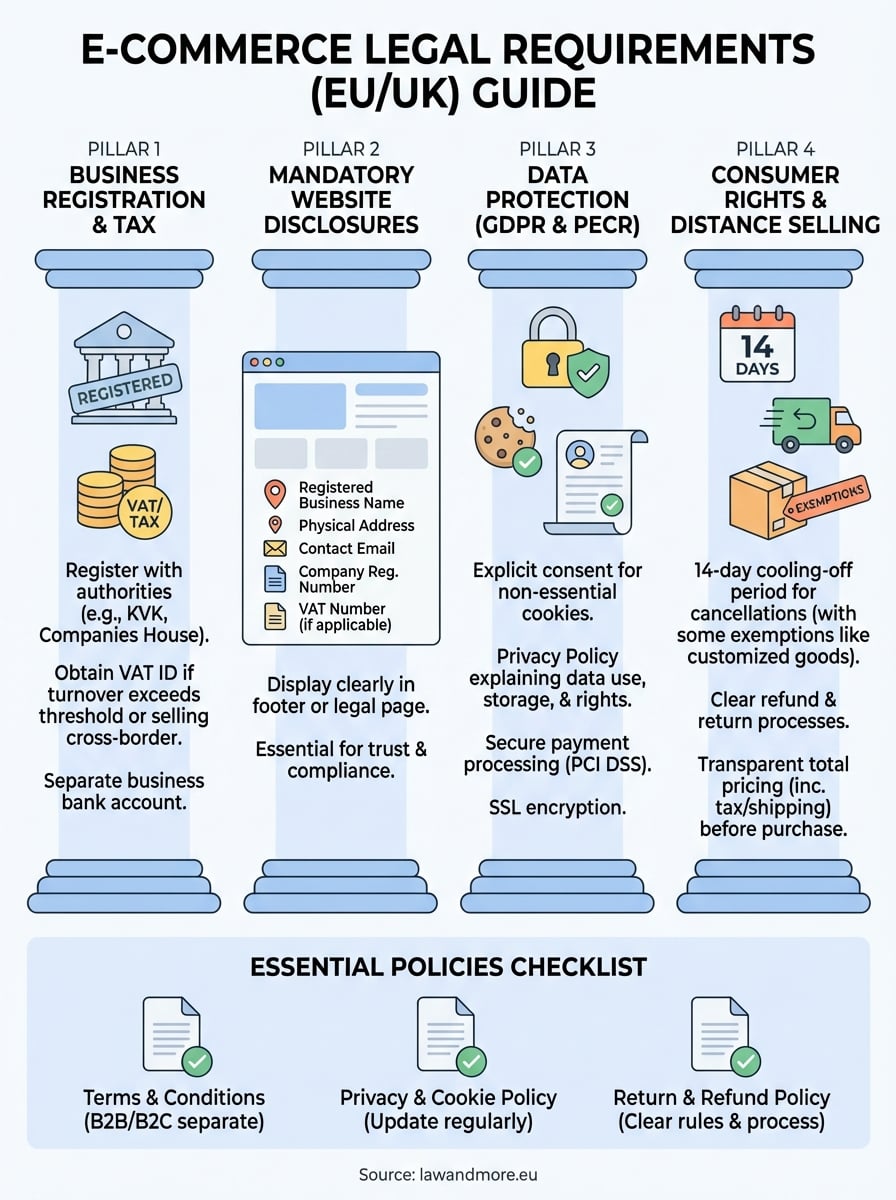
You need to register your business with the appropriate authorities before you sell anything online. In the Netherlands, this means registering with the Chamber of Commerce (KVK) and obtaining a VAT identification number if your turnover exceeds the threshold or if you sell cross-border within the EU. Tax obligations vary by country, so determine whether you need to register for VAT in other member states where you have customers. Most businesses also require a business bank account separate from personal finances, as payment processors like Stripe or PayPal will verify your registration details before activating your account.
Display mandatory business information clearly
Your website must show specific business details in an easily accessible location, typically in the footer or a dedicated legal page. This includes your registered business name, physical address, contact email, company registration number, and VAT number if applicable. Customers need to know who they’re buying from and how to reach you without searching through multiple pages. The EU’s Electronic Commerce Directive requires this transparency across all member states, while UK regulations mirror these requirements post-Brexit.

Clear contact information builds customer confidence and prevents regulatory issues.
Implement proper data protection measures
Data protection is non-negotiable when you collect customer information like names, addresses, payment details, or browsing behavior through cookies. You must have a privacy policy that explains what data you collect, why you collect it, how you protect it, and how long you keep it. Install SSL certificates to encrypt transactions, comply with PCI DSS standards for payment security, and obtain explicit consent before using non-essential cookies. These measures protect both your customers and your business from data breaches that can result in fines up to €20 million under GDPR.
Key EU and UK rules you must follow
Understanding which e-commerce legal requirements apply to your business depends on where you’re established and where your customers are located. Both the EU and UK maintain comprehensive frameworks that protect online shoppers, though the UK has adopted separate regulations since Brexit. If you sell to customers in both territories, you need to comply with both sets of rules. These regulations cover consumer rights, data protection, product safety, and fair trading practices that directly affect how you operate your online store.
Consumer Contracts Regulations and distance selling rights
The Consumer Contracts Regulations give your customers specific rights when they buy from your online store. You must provide clear information about your products, total prices including all taxes and shipping costs, and delivery timeframes before customers complete their purchase. Customers receive a mandatory 14-day cooling-off period starting from when they receive the goods, during which they can cancel for any reason and receive a full refund. You have 14 days to process their refund after receiving the returned items.
The 14-day cooling-off period is non-negotiable except for customized products, perishable goods, or sealed items opened by the customer.
Certain product categories are exempt from cancellation rights, including made-to-order items, perishable food, sealed audio or video recordings that customers have opened, and newspapers or magazines. You must clearly state these exemptions on your website before purchase. When customers exercise their right to cancel, they pay for return shipping unless you’ve agreed to cover it or failed to inform them they must pay.
GDPR and data collection rules
The General Data Protection Regulation (GDPR) in the EU and the UK GDPR both require you to protect customer data and obtain proper consent before processing personal information. Your privacy policy must explain what data you collect, your legal basis for collecting it, how you use it, who you share it with, and how long you keep it. You need explicit customer consent before placing non-essential cookies on their devices, which means pre-ticked boxes don’t count as valid consent.
Privacy and Electronic Communications Regulations (PECR) add additional rules for marketing communications and cookies. You can’t send marketing emails to individual consumers without their prior consent, though you have more flexibility with business-to-business marketing. Store customer payment information securely according to PCI DSS standards, and implement appropriate technical measures to prevent data breaches that could result in fines up to €20 million or 4% of annual turnover.
Product safety and cross-border access
Your products must meet EU safety standards when you sell to EU customers, often indicated by CE marking on relevant products like electronics or toys. The UK maintains similar requirements through UKCA marking for products sold in Great Britain. You’re responsible for ensuring products are safe before placing them on the market, which means conducting risk assessments and keeping technical documentation.
Geo-blocking regulations prevent you from discriminating based on customer location within the EU. You can’t block customers from other EU countries from accessing your website, automatically redirect them to country-specific sites without permission, or apply different prices based on their location. Payment terms must remain consistent, so if you accept Visa cards from Dutch customers, you must accept them from German customers too.
Essential policies and documents for your website
Your website needs specific legal documents that explain your business practices and protect both you and your customers. These policies form the foundation of your e-commerce legal requirements and must be easily accessible, typically linked in your website footer. You can’t simply copy policies from other websites because each document needs to reflect your actual practices and comply with the jurisdiction where you operate. Generic templates often miss important details or include clauses that don’t apply to your business model.
Terms and conditions for your store
Terms and conditions create a binding contract between you and your customers that governs the sale. Your terms should cover payment methods accepted, delivery timeframes, product descriptions and warranties, liability limitations, and dispute resolution procedures. You need separate terms for business-to-consumer (B2C) and business-to-business (B2B) transactions since consumer protection laws don’t apply to commercial buyers. Make these terms available before checkout so customers can review them before completing their purchase.
Privacy and cookie policies
Your privacy policy must explain what personal data you collect, why you collect it, how you protect it, and how long you retain it. Include details about third-party services like analytics tools, payment processors, or email marketing platforms that process customer information. A separate cookie policy describes which cookies your site uses, whether they’re essential or optional, and how customers can manage their preferences. Both policies need regular updates whenever you change data practices or add new tools.

Your privacy policy isn’t just a legal requirement. It’s how you demonstrate trustworthiness to potential customers.
Return and refund policy
A clear return policy tells customers exactly what to expect when they want to send something back. Specify the 14-day cooling-off period, whether you cover return shipping costs, the condition products must be in, and your refund processing timeframe. List any product exceptions like customized items or perishable goods that customers can’t return, and explain how customers should initiate a return through your process.
Common compliance pitfalls and how to avoid them
Online sellers frequently make preventable mistakes that lead to fines or customer disputes. Understanding these errors helps you avoid regulatory problems and maintain customer trust with your business.
Outdated policies and pricing transparency
Many businesses fail to update their privacy policies after adding tools like analytics or email software. You must revise your privacy policy each time you integrate a third-party service that processes customer data. Another common mistake involves unclear pricing where the final cost at checkout differs from what customers saw on product pages.

Transparency in pricing isn’t optional. It’s a core consumer protection requirement.
Missing business information and return exceptions
Incorrect business registration details on your website violate basic e-commerce legal requirements that authorities actively monitor. Regulators check whether you’ve listed your company name, registration number, and physical address correctly. Store owners also frequently ignore the 14-day return period exemptions for customized or perishable products, leading to unnecessary refunds. Document why certain items can’t be returned and display these exemptions clearly before customers complete their purchase.
Next steps
You now have a clear understanding of the e-commerce legal requirements that protect your business and customers. Start by auditing your current website against the checklist in this guide. Check whether you’ve displayed all mandatory business information, implemented proper privacy policies, and explained customer rights clearly. If you discover gaps, prioritize data protection compliance and consumer contract regulations first since these carry the highest penalties.
Review your policies quarterly to ensure they reflect your current practices and any regulatory changes. Set calendar reminders to update your privacy policy whenever you add new tools or services that process customer data. Document your compliance efforts with dates and descriptions of changes made so you can prove due diligence if questions arise.
Legal compliance becomes complex when you’re managing multiple jurisdictions or handling specialized products. If you need professional guidance on implementing these requirements correctly, Law & More’s experienced e-commerce lawyers can review your specific situation and ensure your online store operates legally across all markets you serve.