
Law & More

Gold scales of justice on a white office desk; one side holds a stack of legal documents and a pen, the other side holds a pile of gold coins, with a laptop in the background

Extradition Cases: How International Criminal Law Applies in the Netherlands

When another country seeks to prosecute an individual located in the Netherlands, the Dutch legal system engages one of two distinct procedures. This is not a mere technicality; the path taken profoundly impacts the individual’s rights, the speed of the process, and the available grounds to contest the transfer. Understanding this fundamental distinction is the

Extradition Cases: How International Criminal Law Applies in the Netherlands Read More »

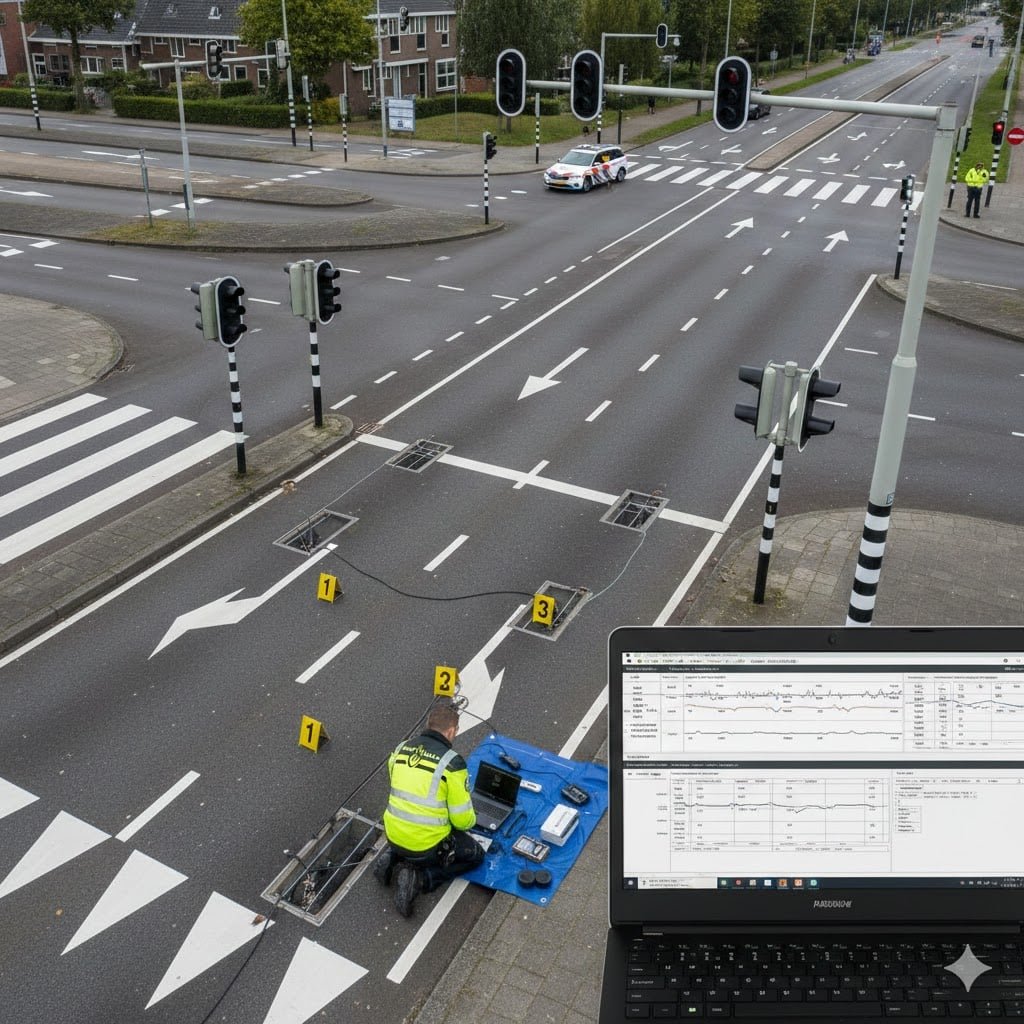
Forensic traffic investigator analyzing induction loops embedded in Dutch road surface at intersection for traffic criminal case, aerial view showing detection systems

Loop Research in Traffic Criminal Cases: Legal Analysis, Jurisprudence and Defence

A Comprehensive Guide to the Evidentiary Value of Induction Loops and Your Legal Remedies as a Suspect If you have been involved in a serious traffic accident or charged with a significant traffic offence in the Netherlands, you may have encountered the term lussenonderzoek (loop research). For many suspects and even some legal professionals, this

Loop Research in Traffic Criminal Cases: Legal Analysis, Jurisprudence and Defence Read More »

Lawyer consulting with parent about child protection law in modern Law & More office, with legal documents and IVRK law books on desk

Child’s Interest First: Article 3 UNCRC in Dutch Legal Practice

The principle seems straightforward: in all actions concerning children, their best interests shall be a primary consideration. Yet, for legal professionals in the Netherlands, the practical application of Article 3 of the UN Convention on the Rights of the Child (UNCRC) is anything but simple. It acts as a fundamental benchmark in family law, migration

Child’s Interest First: Article 3 UNCRC in Dutch Legal Practice Read More »

Hands of a child, present during a conversation about visitation arrangement.

The child’s wishes in visitation arrangements: when does your child have a say?

When parents divorce or separate, the question of visitation arrangements is often one of the most emotionally charged topics. Parents have their own wishes and ideas, but what is the role of the child itself? From what age does a child’s opinion count? And can a child refuse visitation or even enforce it? In this

The child’s wishes in visitation arrangements: when does your child have a say? Read More »

Professional organized desk with criminal law documents regarding five investigative questions, investigation requests and expert examination in criminal proceedings

Investigative Questions in Criminal Law: The Motor of a Fair Criminal Process

The outcome of a criminal trial is rarely decided solely in the courtroom. Often, the verdict is shaped months earlier, in the silence of an interrogation room, the technical analysis of a forensic lab, or the meticulous drafting of investigative requests by a defense lawyer. At the heart of this process lies a specific legal

Investigative Questions in Criminal Law: The Motor of a Fair Criminal Process Read More »

Electricity grid high-voltage substation with congestion management monitoring and transport capacity control

Grid Congestion Management: Rights, Obligations and Legal Remedies for Dutch Energy Producers

The success of the renewable energy transition in the Netherlands has created a paradox: the rapid deployment of solar parks and wind farms has outpaced the expansion of the physical infrastructure required to transport that energy. This has resulted in widespread “netcongestie” (grid congestion), creating significant waiting lists (wachtrij) for grid connections and leading to

Grid Congestion Management: Rights, Obligations and Legal Remedies for Dutch Energy Producers Read More »

Medical documentation and legal files on desk in context of aggravated assault and serious bodily injury

Refusing a Transfer of Undertaking: Rights, Obligations, and Legal Consequences

Mergers, acquisitions, and internal restructurings are commonplace in the corporate world. For employees, however, a “transfer of undertaking” (overgang van onderneming) often brings uncertainty. Will my role change? Do I have to move to a new location? And most importantly: Do I have to go? Under Dutch law, the starting point is clear: employees transfer

Refusing a Transfer of Undertaking: Rights, Obligations, and Legal Consequences Read More »

Medical documentation and legal files on desk in context of aggravated assault and serious bodily injury

Serious Bodily Injury in Dutch Criminal Law: Definition, Evidence, and Implications

In the realm of Dutch criminal law, few definitions carry as much weight regarding sentencing and legal consequences as “zwaar lichamelijk letsel” or serious bodily injury. The distinction between simple assault (mishandeling) and severe assault (zware mishandeling) often hinges entirely on how the court qualifies the resulting injury. This qualification is not merely a matter

Serious Bodily Injury in Dutch Criminal Law: Definition, Evidence, and Implications Read More »

A group of professionals in a modern office meeting room reviewing documents and laptops during a business discussion.

Due Diligence in Dutch M&A Transactions: Legal Risks, Compliance, and Best Practices

When you’re buying or merging with a company in the Netherlands, legal due diligence isn’t just a formality. It’s your main defence against hidden risks that could turn a promising deal into a costly mistake. Many buyers focus heavily on financial numbers but miss critical legal issues that can damage the transaction later. A thorough

Due Diligence in Dutch M&A Transactions: Legal Risks, Compliance, and Best Practices Read More »

Data Retention Periods Under Dutch Law: How Long May You Keep Customer Data?

Dutch law takes a two-sided approach to keeping customer data. Business records like financial documents must be retained for at least seven years under tax law, whilst personal data under GDPR must not be kept longer than necessary for its intended purpose. This creates a careful balance between meeting legal obligations and respecting privacy rights.

Data Retention Periods Under Dutch Law: How Long May You Keep Customer Data? Read More »

Online Purchases and Subscriptions Under Dutch Law: Understanding Automatic Renewal

When you sign up for an online service or subscription in the Netherlands, you might wonder if you’re automatically locked into renewals. Dutch law prohibits companies from automatically converting expired subscriptions into new fixed-term contracts, and they must allow you to cancel with no more than one month’s notice in most cases. These rules apply

Online Purchases and Subscriptions Under Dutch Law: Understanding Automatic Renewal Read More »

Dismissal After Remote Work in the Netherlands: Legal Proof of Underperformance

Remote work has changed how employers monitor performance. Dutch employment law still holds employers to strict standards when dismissing someone for underperformance. In the Netherlands, underperformance must be clearly documented and communicated to the employee in writing with specific examples. The employee must be given a fair opportunity to improve before a court will approve

Dismissal After Remote Work in the Netherlands: Legal Proof of Underperformance Read More »

Minority Shareholders in the Netherlands: Your Rights When the Majority Pushes Through

Owning shares in a Dutch company should give you a voice. But what happens when the majority shareholder makes decisions that leave you sidelined? As a minority shareholder in the Netherlands, you face unique challenges when larger stakeholders push through actions that may not align with your interests. Understanding your legal position is essential to

Minority Shareholders in the Netherlands: Your Rights When the Majority Pushes Through Read More »

Cookies, Analytics and Online Advertising in the Netherlands: GDPR Compliance Guide

Websites in the Netherlands face strict rules about how they use cookies, track visitors, and show online ads. The Dutch Data Protection Authority now monitors around 10,000 websites each year and plans to warn 500 organisations annually for breaking these rules. Recent fines of €600,000 and €40,000 show that enforcement has become serious. You must

Cookies, Analytics and Online Advertising in the Netherlands: GDPR Compliance Guide Read More »

Law & More