Overview
Corporate law, commercial law, and debt collection form the legal backbone of successful business operations in the Netherlands. Whether you are a foreign entrepreneur establishing your first BV, an international company expanding to the Brainport region, a business navigating complex shareholder structures, or dealing with commercial disputes and payment defaults, having the right legal foundation is essential.
At Law & More, we understand the unique challenges faced by international businesses in the Dutch corporate and commercial landscape. From company incorporation and governance to shareholder disputes, commercial contracts, and professional debt collection, our corporate lawyers combine deep knowledge of Dutch law with practical, international business experience.
Our Eindhoven and Amsterdam offices serve the vibrant tech ecosystem of the Brainport region, where innovation meets entrepreneurship. We work with startups, scale-ups, and established international corporations, providing comprehensive corporate and commercial legal services in English, Dutch, German, and other languages.
Need Expert Advice?
Our corporate law specialists are ready to help. Get personalized legal guidance today.
Quick Navigation
Latest Insights
Corporate Law Articles
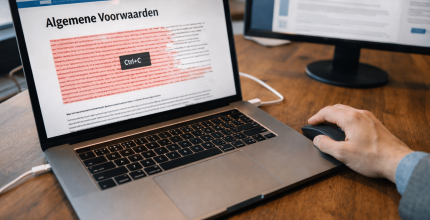
You start a webshop. You have a sleek website, a professional logo, and great products

When it comes to mergers and acquisitions in the tech sector, the opportunities are massive.

A prenuptial agreement under Dutch law (huwelijksvoorwaarden or partnerschapsvoorwaarden) is a notarized contract you and
What We Do
BV and NV incorporation and restructuring
Corporate governance and compliance
Shareholder agreements and disputes
Commercial contracts and general terms & conditions
Mergers, acquisitions, and company sales
Directors' liability and D&O insurance
Debt collection and payment recovery (zakelijke incasso)
Commercial disputes and litigation
Annual general meetings and board advisory
Cross-border transactions and international structures
Why Choose Law & More
Deep expertise in Dutch corporate and commercial law with international perspective
Transparent fixed-fee packages for standard incorporations and debt collection
Multilingual service (English, Dutch, German, Russian, Turkish)
Strategic location in Brainport Eindhoven tech ecosystem
Practical, business-focused advice tailored to your growth stage
Efficient debt collection with high success rates
Frequently Asked Questions
Common questions about corporate law answered by our experts
The total cost of incorporating a BV (besloten vennootschap) typically ranges from €1,500 to €3,000, including notary fees (approximately €500-€1,000), registration fees at the Chamber of Commerce (KVK) of around €50, and legal assistance fees. Additional costs may include translation of documents for foreign shareholders, apostille certifications, and tax advisory services. At Law & More, we offer transparent fixed-fee packages for standard BV incorporations, with clear pricing for international clients. Our all-in packages typically include drafting articles of association, coordinating with the notary, handling KVK registration, and providing initial tax structuring advice.
Yes, foreigners can absolutely serve as directors (bestuurders) of a Dutch BV. There are no nationality or residency requirements for BV directors under Dutch corporate law. However, foreign directors should be aware of tax implications, particularly regarding the 183-day rule for tax residency, and may need to arrange proper residence permits if they plan to live in the Netherlands. Directors living outside the Netherlands can manage the company remotely, though this may have tax consequences for the company's residency status. We advise international directors on structuring their role to optimize both legal compliance and tax efficiency.
Since October 2012, the Netherlands abolished the minimum share capital requirement for BVs. You can establish a BV with as little as €0.01 in share capital. However, we typically recommend at least €100-€1,000 in starting capital for practical business operations and to demonstrate financial seriousness to banks and business partners. The share capital must be fully paid up before the notary can establish the company. While the law allows for minimal capital, sufficient capital helps with opening business bank accounts, securing credit facilities, and building credibility with customers and suppliers.
Debt collection in the Netherlands typically follows a structured process: 1. Amicable phase: We send payment reminders and formal demand letters, attempting to reach a payment agreement without court involvement. This resolves approximately 70% of cases. 2. Legal phase: If amicable collection fails, we can initiate summary proceedings (kort geding) for urgent matters or regular court proceedings to obtain a judgment. With a judgment, we can enforce through wage garnishment, bank account seizure, or bailiff execution. 3. International collection: For cross-border debts, we use European payment orders or coordinate with international collection networks. Our success rate is high, and we work on a no-cure-no-pay basis for many standard collection cases, meaning you only pay if we successfully recover your debt.
The key differences are: Liability: A BV provides limited liability - shareholders are generally not personally liable for company debts. A sole proprietorship offers no such protection; you are personally liable for all business obligations. Taxation: A BV pays corporate tax (19% up to €200,000, 25.8% above). Sole proprietorships pay personal income tax (up to 49.5%). Formality: BVs require notary incorporation, annual accounts, and more administration. Sole proprietorships are simpler to establish and operate. For international entrepreneurs and those seeking investor funding, a BV is usually preferred due to liability protection and professional image.
While not legally required, a shareholders' agreement is highly recommended for any BV with multiple shareholders. The agreement regulates matters beyond the articles of association, including: - Transfer restrictions and pre-emption rights - Tag-along and drag-along provisions - Deadlock resolution mechanisms - Non-compete obligations - Dividend policies - Exit scenarios and valuation methods A well-drafted shareholders' agreement prevents disputes and provides clear procedures for common situations. It is especially important for joint ventures, investor participation, or family businesses where multiple family members hold shares.
DGA stands for directeur-grootaandeelhouder (director-major shareholder) - someone who is both a director and holds at least 5% of company shares (including partner/family holdings). Tax implications: - Mandatory minimum salary of €56,000 (2026) or 75% of highest company salary - Cannot build up unemployment benefits - Stricter expense reimbursement rules - Different taxation for company cars and benefits The DGA structure is common for owner-managers and offers tax planning opportunities through the interplay between corporate and personal taxation. We help structure DGA relationships tax-efficiently while ensuring compliance.
The timeline depends on the collection method: Summary proceedings (kort geding): 2-4 weeks from filing to court hearing, with judgment typically on the same day. This is for urgent matters where quick action is needed. Regular proceedings: 4-12 months depending on complexity and court workload. Most straightforward debt cases are resolved within 6 months. European Payment Order: 30-90 days for uncontested claims against debtors in other EU countries. Enforcement after judgment: 1-6 months depending on debtor's assets and cooperation. Wage garnishment or bank seizures can be very quick if assets are identified. Many cases settle during the legal process when debtors realize court proceedings are serious, often resulting in payment arrangements before final judgment.
Key Legal Terms
Important terminology explained in plain language
BV (Besloten Vennootschap)
A private limited liability company, the most common corporate structure for small to medium-sized businesses in the Netherlands. Shareholders have limited liability (limited to their investment), shares cannot be publicly traded, and the company must have articles of association drafted by a notary. The BV has legal personality separate from its shareholders and can own property, enter contracts, and sue or be sued in its own name. No minimum share capital required since 2012.
DGA (Directeur-Grootaandeelhouder)
DGA (Directeur-Grootaandeelhouder) Director-major shareholder: a person who serves as director of a BV and holds at least 5% of the company shares (including shares held by their partner or certain relatives). DGAs face specific tax obligations including mandatory minimum salary requirements (€56,000 in 2026 or 75% of highest company salary), different expense reimbursement rules, and cannot claim unemployment benefits. The status automatically applies when ownership and control thresholds are met.
Shareholder Agreement (Aandeelhoudersovereenkomst)
A private contract between shareholders regulating matters beyond the articles of association. Common provisions include transfer restrictions, pre-emption rights, tag-along and drag-along rights, deadlock resolution mechanisms, non-compete clauses, dividend policies, and governance arrangements. Unlike articles of association, shareholder agreements are private (not publicly registered) and can be more flexible. Essential for joint ventures and multiple-shareholder situations.
Articles of Association (Statuten)
A private contract between shareholders regulating matters beyond the articles of association. Common provisions include transfer restrictions, pre-emption rights, tag-along and drag-along rights, deadlock resolution mechanisms, non-compete clauses, dividend policies, and governance arrangements. Unlike articles of association, shareholder agreements are private (not publicly registered) and can be more flexible. Essential for joint ventures and multiple-shareholder situations.
General Terms & Conditions (Algemene Voorwaarden)
Standardized contract terms that apply to all transactions with customers or suppliers. In the Netherlands, general terms must comply with strict fairness requirements under the Dutch Civil Code. Terms must be provided before contract conclusion, and unfair clauses can be voided. Businesses should have their terms reviewed by a lawyer to ensure enforceability. Properly drafted general terms protect against liability, define payment terms, and regulate dispute resolution.
Debt Collection (Incasso)
The process of recovering outstanding payments from customers or clients. Dutch debt collection typically follows two phases: 1) Amicable collection through payment reminders and demand letters, and 2) Legal collection through court proceedings and enforcement. Collection agencies must be registered and comply with strict conduct rules. Many cases are resolved amicably, but when necessary, creditors can obtain judgments and enforce through wage garnishment, bank seizures, or bailiff execution.
Summary Proceedings (Kort Geding)
Summary Proceedings (Kort Geding) An expedited court procedure for urgent matters requiring quick decisions, including payment disputes. Cases are heard within 2-4 weeks, with judgments typically delivered the same day. The judge can order immediate payment or other provisional measures. While technically provisional, kort geding judgments often resolve disputes definitively. Commonly used for debt collection, contract enforcement, and preventing imminent harm to business interests.
Commercial Register (Handelsregister)
The public register maintained by the Chamber of Commerce (KVK) containing information about all businesses in the Netherlands. Every company must register before commencing operations. The register includes company name, registered address, directors, authorized signatories, and annual accounts (for larger companies). Information is publicly accessible and used for due diligence, creditworthiness assessment, and legal verification. Keeping register information current is mandatory.
Director Liability (Bestuurdersaansprakelijkheid)
Directors can be held personally liable despite the company's limited liability in specific circumstances: improper management causing company damage, continuing business when bankruptcy is imminent, failure to file annual accounts, not paying taxes when due, or violating statutory duties. Personal liability pierces the corporate veil and can result in directors compensating damages from personal assets. Proper corporate governance, documentation, and D&O insurance are important protections.
European Payment Order (Europees Betalingsbevel)
A simplified procedure for recovering uncontested cross-border debts within the EU. If a debtor doesn't contest the claim within 30 days, you automatically receive an enforceable order valid across all EU member states. Much faster and cheaper than regular international litigation. The procedure is standardized with EU-wide forms and can be initiated online. Particularly useful for B2B debts where you have clear documentation (invoices, contracts) and the debtor simply isn't paying.
Have Questions About Corporate Law?
Our experienced lawyers are ready to help. Schedule a consultation to discuss your specific situation.