Fourteen Days To Change Your Mind
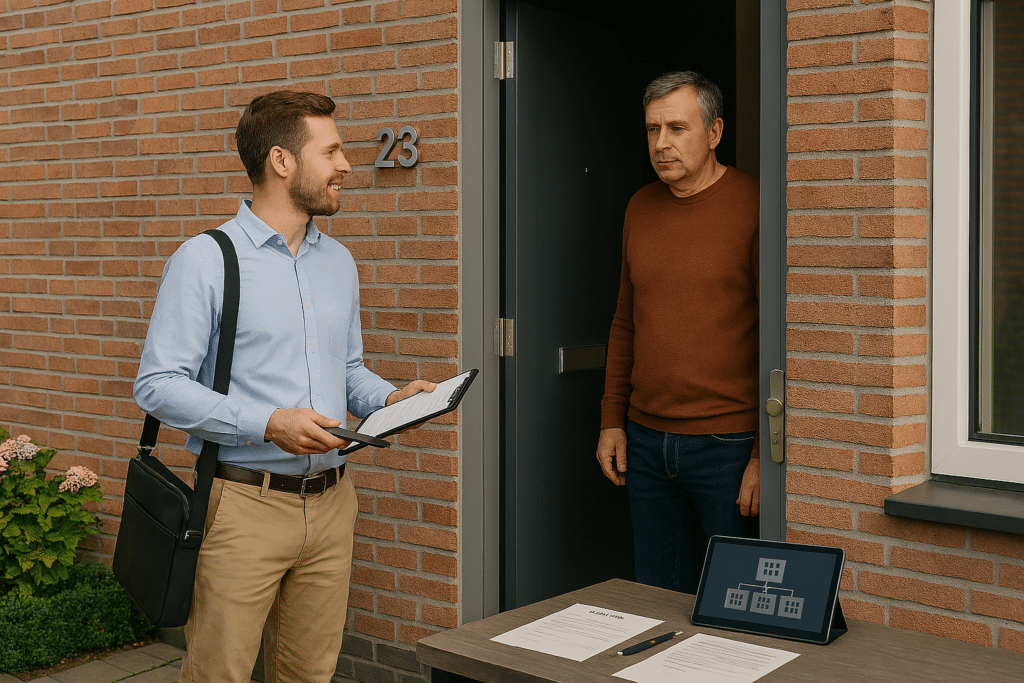
It’s Monday evening, quarter past seven. You’re on the couch after a long workday. The doorbell rings. At your door stands a friendly-looking salesperson with a glossy brochure. Solar panels, special offer, this price today only. Your neighbors have already signed up, he tells you. The discount disappears tomorrow.
You feel the pressure. It sounds interesting, but actually you want to think about it first. Yet you sign. The salesperson is so convincing, and maybe you do need those solar panels after all. Before you know it, your signature is under an eighteen-thousand euro contract.
The next morning you wake up with a nagging feeling. Was this wise? You search online and discover that the same installation is available elsewhere for twelve thousand euros. Regret sets in. But you’ve signed, so now you’re stuck with it… or are you?
Here comes the good news: Dutch law gives you fourteen days to reconsider. Fourteen days in which you can say without giving any reason: “I’m not doing this after all.” No penalty, no hassle, just your money back. And surprisingly enough, many people don’t know this.
What Exactly Is Door-to-Door Sales?
The word sounds old-fashioned, but the situation is urgently current. Door-to-door sales – or “colportage” as Dutch law calls it – is the legal term for sales outside the normal retail space. So not in a shop or showroom, but at your door, on the street, or at an event you didn’t specifically come for.
Think of the energy company that rings your doorbell for a new contract. Or the seller at the weekly market who talks you into a newspaper subscription. Or that friendly lady at the festival who persuades you to sign up for a donation subscription. These are all situations where you’re surprised by an offer you didn’t ask for.
The legislator has deliberately built in extra protection for these kinds of situations. Why? Because you have no time to compare calmly, because you feel social pressure to stay polite, and because sellers often use psychological tricks to tempt you into a purchase you would never otherwise have made.
An example from practice: Mrs. De Vries received a visit from an insulation company in 2024. The salesperson was charming, professional, and mentioned all kinds of subsidies she could get. The fifteen-thousand euro contract suddenly seemed like a bargain. Only a week later, when a friend of hers who works in construction saw the quote, it turned out the price was twice as high as normal. Fortunately, she knew about her right of withdrawal. She sent a simple email, and within two weeks she had her three-thousand euro deposit back.
From Eight To Fourteen Days: The Law Has Become Stricter
Until 2014, the Netherlands had a separate Door-to-Door Sales Act with eight days cooling-off period. That was already reasonable protection, but Europe wanted it better. In that year, the European Consumer Rights Directive was implemented, and the protection was significantly expanded.
Now everything is in the Civil Code, Book 6, and the cooling-off period has become fourteen days. But more importantly: the requirements for sellers are stricter, the sanctions for violations are harder, and judges must check ex officio whether sellers comply with the rules. That last point is crucial: even if you don’t explicitly indicate that the seller has violated his obligations, the court must investigate this automatically.
Your Right of Withdrawal: Fourteen Days Without Mercy
The beauty of the right of withdrawal with door-to-door sales is its simplicity. You have fourteen days from the moment you sign the contract (for services) or receive the product (for goods) to say: I want out of this. And you don’t have to give any reason.
The seller cannot ask why. You don’t have to explain that you found something cheaper, that your partner doesn’t want it, or that you simply have regrets. The only thing you need to do is send a message within those fourteen days stating that you’re withdrawing from the contract.
Let’s be very practical for a moment. You sign a contract for a gym membership on Monday with a salesperson who approached you on the street. On Tuesday you receive written confirmation by email. That Tuesday is day one of your cooling-off period. You then have until and including Tuesday in two weeks’ time, until 11:59 PM, to send a withdrawal notice.
Now it gets interesting: what if the seller didn’t tell you about this right of withdrawal at all? Or what if he did say something, but never gave you the written information that’s mandatory? Then those fourteen days are automatically extended to a maximum of twelve months. A whole year in which you can still withdraw. This isn’t a favor from the seller, but a sanction imposed by law.
In 2025, a case was heard in North Holland where someone only discovered eight months after signing an energy contract that he had a right of withdrawal. The seller had deliberately concealed this. The judge ruled that the withdrawal was valid, the contract was declared void, and all payments had to be refunded. An expensive lesson for the seller.
What Sellers Must Tell You
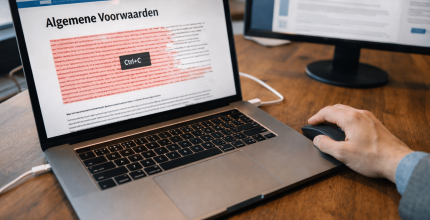
A door-to-door salesperson has a whole laundry list of legal obligations. He must give you a whole series of information on paper or by email before you sign. And I don’t mean a verbal explanation that you’ll have forgotten within an hour, but in black and white, so you can read it at your leisure.
First, he must explain crystal clear that you have fourteen days cooling-off period, how you can exercise that right of withdrawal, and what the consequences are. He must even give you a standard withdrawal form to make this easy. Second, it must be clear who he exactly is: company name, address, Chamber of Commerce number, contact details. This may sound obvious, but there are plenty of handymen who use a fantasy name and don’t have a Chamber of Commerce number.
Furthermore, the total price must be crystal clear, including all costs. No fine print where all kinds of surcharges pop up later. The payment conditions must be clear: when do you pay what, and how. And if it’s about a product: when will it be delivered, where, and by whom.
It all sounds logical, but practice is stubborn. Many sellers do say something, but don’t give everything in writing. Or they email a pdf afterwards that’s so full of legal jargon that an average person can’t understand it. Or they ‘forget’ to mention the right of withdrawal, because yes, then there’s a greater chance you won’t withdraw.
And that’s exactly where it gets interesting. Because if a seller violates these obligations, it has far-reaching consequences.
When The Seller Neglects His Duty
The Supreme Court issued an important judgment in 2021 that sets the tone. Judges must check ex officio – that is, on their own initiative, without you asking for it – whether the seller has complied with his information obligations. If that’s not the case, the judge must intervene with sanctions that are effective, deterrent, and proportionate.
What does that mean in practice? First of all, the withdrawal period can be extended, as we’ve already seen, to twelve months. But more importantly: the judge can reduce the price you have to pay. And then we’re not talking about a symbolic amount, but about discounts that can range from ten percent for minor violations to sixty percent for structural breaches.
Take the case from 2025 where an insulation company made the same mistake with dozens of customers: no written confirmation of the right of withdrawal, unclear information about the total price, and starting work while the cooling-off period was still running. The judge ruled that customers who wanted to withdraw three months after signing still had the right to do so. Moreover, they only had to pay forty percent of the agreed price. The remaining sixty percent was a sanction for the repeated violation of the rules.
This isn’t an exceptional ruling. It regularly happens that judges impose substantial discounts. The purpose is twofold: the consumer must be compensated for the fact that he wasn’t properly informed, and the seller must be punished so severely that he’ll think twice next time before ignoring the rules.
How Do You Cancel A Purchase?
The practice is simpler than you think. You don’t need to hire a lawyer, get an official form from the municipality, and send a registered letter with messengers. A simple email can suffice, as long as it’s clear what you want.
Start by checking whether you’re within the period. Count fourteen days from the moment you received the product or signed the contract. If you think you’re too late, check whether the seller informed you correctly. If not, you may have up to a year.
Then you send a message. This can be by email, by letter, via WhatsApp, or via an online form if the seller offers that. The most important thing is that you’re clear. A text like “I hereby withdraw from the agreement I concluded with you on [date] for [product or service]” is sufficient. You can supplement this with your contact details and the request to refund the paid amount to a specific account number.
Always save proof of dispatch. A screenshot of your email, a copy of the letter, a photo of the WhatsApp message. If the seller later claims he didn’t receive anything, then you at least have proof. For extra security, you can send a letter by registered mail, although that’s not mandatory.
What happens after your withdrawal? The seller has fourteen days to refund all your payments. All payments really means all payments: the deposit, the first installment, everything you’ve already transferred. You in turn must return any received products within fourteen days, and you must pay the return costs unless the seller has promised to do so or hasn’t informed you about those costs.
Important point: you may try out the product. If you’ve bought a vacuum cleaner, for example, you may use it a few times to see if it meets your needs. Normal wear and tear from testing is no problem. Only if you’ve used the product intensively in a way that goes beyond normal testing can the seller demand compensation for depreciation.
When Can’t You Withdraw?
The right of withdrawal is broad, but not unlimited. There are exceptions, and those are important to know. The main one is the situation of urgent repairs. If your central heating boiler breaks down in the middle of winter and you call a technician who comes immediately to repair it, then you can’t cancel that afterwards. That’s a service you urgently needed yourself and for which you explicitly asked the technician.
Products that are specially custom-made for you usually also can’t be withdrawn from. A kitchen that’s specially designed and produced for your home falls under this. The same applies to sealed products that you’ve opened and where return isn’t possible for hygienic reasons, such as underwear or earplugs.
Perishable goods are also excluded. If you buy fresh flowers or a ready-made meal from a seller at the market, then there’s no point wanting to return them three days later. And with digital content that you’ve already fully downloaded, such as a movie or an e-book, the right of withdrawal only applies if you’ve explicitly agreed in advance to immediate delivery and thereby waived your right of withdrawal.
These exceptions, by the way, are strictly interpreted by judges. In case of doubt, you do have a right of withdrawal. A seller who claims that withdrawal isn’t possible must be able to prove this based on the legal exceptions.
What If The Service Has Already Been Partly Provided?
A common situation: you sign a contract for insulation or painting work, and before you realize it, the contractor has already started the work. Then you might think that withdrawal is no longer possible. But that’s not correct.
You can still withdraw, even if the service has already been partly performed. However, you must then pay a proportional amount for the work that’s already been done. That amount is calculated proportionally: if half the work is finished, you pay half the total price.
But watch out: this only applies if the seller has met three conditions. First, you must have given express consent in advance to start the work during the cooling-off period. Second, the seller must have informed you about your right of withdrawal. And third, he must have pointed out that you must pay for the work already performed.
If one of these conditions hasn’t been met, then the judge can determine that you have to pay much less or even nothing at all. In a case from 2025, an energy company had already started supplying electricity to a new customer, without informing that customer about the right of withdrawal. When the customer withdrew after three months, the judge ruled that he didn’t have to pay anything for those three months, despite having actually consumed energy. The sanction for violating the information obligation was so severe that the entire payment obligation was canceled.
This is important to realize: the sanctions aren’t symbolic. They’re meant to bite, so that sellers think twice next time before flouting the rules.
Practical Tips: How Do You Protect Yourself?
When the doorbell rings and there’s a salesperson at the door, what do you do? The first advice is simple: never sign immediately. Say politely that you always sleep on these kinds of decisions for a night, and ask for written information that you can receive by email. Any serious seller will have no problem with that.
Watch for red flags. If someone says the offer only applies today, that you must sign otherwise the opportunity is gone, that your neighbors have also signed, or that there’s a waiting list where he can give you priority – then you should be extra alert. These are classic psychological tricks to create time pressure. An honest seller gives you time to decide calmly.
Always ask for identification. Name, company name, credentials. Note the Chamber of Commerce number and look it up. Does the company really exist? What do online reviews say? A few minutes of googling can save you a lot of trouble.
If you’ve signed anyway and get doubts, act quickly. Don’t wait until the last day of the cooling-off period, because then you risk your withdrawal arriving just too late. Send a withdrawal notice within a few days and carefully save the proof of it.
And if the seller is being difficult? If he refuses to refund your money, says withdrawal isn’t possible, or threatens all kinds of costs? Then you have several options. You can file a formal complaint with the Netherlands Authority for Consumers & Markets, which supervises fair trading practices. You can go to a disputes committee that gives binding advice in many sectors. You can call the Legal Counter for free advice. And if it’s about a substantial amount, you can consider hiring a lawyer.
Frequently Asked Questions From Practice
People often wonder if they can withdraw if they’ve already paid. The answer is a resounding yes. Payment doesn’t affect your right of withdrawal. You simply get your money back, within fourteen days after your withdrawal.
Another question is whether the right of withdrawal also applies if the agreement was concluded by telephone. That depends. If after the phone call a salesperson came to your home to sign the contract, then it falls under door-to-door sales and you have fourteen days. If it was arranged purely by phone without a home visit, then the rules for ‘distance contracts’ apply, which incidentally also give a fourteen-day right of withdrawal.
And what if you’ve already used the product? As mentioned, you may try it out. Using a vacuum cleaner a few times is fine. Walking around in new clothes for a few days to see if they fit comfortably is also no problem. Only with excessive use – think of using that vacuum cleaner daily for a month – can the seller ask for reasonable compensation for depreciation.
Specific Situations: Energy, Insulation, Insurance
Energy contracts form a large part of door-to-door sales cases. There are energy companies that go through entire neighborhoods with aggressive sales tactics. Important to know: the right of withdrawal also applies to energy contracts, despite any clauses in the contract that claim otherwise. Those clauses are void. You simply have fourteen days, and if the seller hasn’t informed you properly, this can extend to a year.
The same applies to insulation and solar panels. These are often sold via door-to-door sales, often at extortionate prices. The work may not start during the cooling-off period unless you explicitly give permission for this. And even if the work has already started, you can still withdraw and only have to pay a proportional part – provided the seller informed you correctly.
Insurance is a separate story because it has special cancellation options in the first year. But here too the fourteen-day right of withdrawal applies if the insurance was concluded via door-to-door sales. Note: some insurances, particularly life insurance, have additional legal rules.
The Future: Stricter Enforcement
In recent years, the Netherlands Authority for Consumers & Markets has become increasingly active in enforcement. Companies that structurally violate the rules face high fines. There have been energy companies that were imposed million-euro fines for misleading door-to-door sales practices.
Municipalities are also becoming more active. More and more municipalities are introducing door-to-door sales bans for certain neighborhoods or for certain products. Some municipalities require a permit from door-to-door sellers and actively check whether sellers comply with the rules. There are even municipalities where you can put a ‘No door-to-door sales’ sticker on your door that has legal value: if a seller still rings the bell, he’s breaking the law.
In the future, protection will probably only become stronger. Europe is working on additional rules, particularly for energy contracts and financial products sold via door-to-door sales. The trend is clear: more and more protection for consumers, less and less room for aggressive sales tactics.
In Conclusion: Don’t Be Afraid To Use Your Rights
The most important thing you should take away from this article is this: you have strong legal rights, and you shouldn’t hesitate to use them. Too often people let themselves be intimidated by sellers who claim withdrawal isn’t possible, or who threaten all kinds of costs, or who simply don’t respond to withdrawal notices.
The law is on your side. If you withdraw within fourteen days, that’s your right. Period. The seller can say what he wants, but the law is crystal clear. And if he doesn’t follow the rules, there are sanctions that hurt.
So next time there’s a salesperson at the door: think of this information. Don’t sign immediately. Ask for written information. Take the time to compare. And if you’ve signed anyway and regret it: withdraw without hesitation. It’s your right, use it.
Disclaimer: This article is intended for general information and does not constitute legal advice for specific situations. For personal legal advice on door-to-door sales issues, you can contact a specialized consumer law attorney.
Last update: December 2025
Legal sources: Dutch Civil Code Book 6 articles 6:230o through 6:230y, European Consumer Rights Directive 2011/83/EU, Dutch case law including ECLI:NL:HR:2021:1677, ECLI:NL:HR:2024:1355, ECLI:NL:RBNHO:2025:11510 and many other judgments from 2024-2025.
Salesperson At Your Door? You Have More Rights Than You Think
Fourteen Days To Change Your Mind
It’s Monday evening, quarter past seven. You’re on the couch after a long workday. The doorbell rings. At your door stands a friendly-looking salesperson with a glossy brochure. Solar panels, special offer, this price today only. Your neighbors have already signed up, he tells you. The discount disappears tomorrow.
You feel the pressure. It sounds interesting, but actually you want to think about it first. Yet you sign. The salesperson is so convincing, and maybe you do need those solar panels after all. Before you know it, your signature is under an eighteen-thousand euro contract.
The next morning you wake up with a nagging feeling. Was this wise? You search online and discover that the same installation is available elsewhere for twelve thousand euros. Regret sets in. But you’ve signed, so now you’re stuck with it… or are you?
Here comes the good news: Dutch law gives you fourteen days to reconsider. Fourteen days in which you can say without giving any reason: “I’m not doing this after all.” No penalty, no hassle, just your money back. And surprisingly enough, many people don’t know this.
What Exactly Is Door-to-Door Sales?
The word sounds old-fashioned, but the situation is urgently current. Door-to-door sales – or “colportage” as Dutch law calls it – is the legal term for sales outside the normal retail space. So not in a shop or showroom, but at your door, on the street, or at an event you didn’t specifically come for.
Think of the energy company that rings your doorbell for a new contract. Or the seller at the weekly market who talks you into a newspaper subscription. Or that friendly lady at the festival who persuades you to sign up for a donation subscription. These are all situations where you’re surprised by an offer you didn’t ask for.
The legislator has deliberately built in extra protection for these kinds of situations. Why? Because you have no time to compare calmly, because you feel social pressure to stay polite, and because sellers often use psychological tricks to tempt you into a purchase you would never otherwise have made.
An example from practice: Mrs. De Vries received a visit from an insulation company in 2024. The salesperson was charming, professional, and mentioned all kinds of subsidies she could get. The fifteen-thousand euro contract suddenly seemed like a bargain. Only a week later, when a friend of hers who works in construction saw the quote, it turned out the price was twice as high as normal. Fortunately, she knew about her right of withdrawal. She sent a simple email, and within two weeks she had her three-thousand euro deposit back.
From Eight To Fourteen Days: The Law Has Become Stricter
Until 2014, the Netherlands had a separate Door-to-Door Sales Act with eight days cooling-off period. That was already reasonable protection, but Europe wanted it better. In that year, the European Consumer Rights Directive was implemented, and the protection was significantly expanded.
Now everything is in the Civil Code, Book 6, and the cooling-off period has become fourteen days. But more importantly: the requirements for sellers are stricter, the sanctions for violations are harder, and judges must check ex officio whether sellers comply with the rules. That last point is crucial: even if you don’t explicitly indicate that the seller has violated his obligations, the court must investigate this automatically.
Your Right of Withdrawal: Fourteen Days Without Mercy
The beauty of the right of withdrawal with door-to-door sales is its simplicity. You have fourteen days from the moment you sign the contract (for services) or receive the product (for goods) to say: I want out of this. And you don’t have to give any reason.
The seller cannot ask why. You don’t have to explain that you found something cheaper, that your partner doesn’t want it, or that you simply have regrets. The only thing you need to do is send a message within those fourteen days stating that you’re withdrawing from the contract.
Let’s be very practical for a moment. You sign a contract for a gym membership on Monday with a salesperson who approached you on the street. On Tuesday you receive written confirmation by email. That Tuesday is day one of your cooling-off period. You then have until and including Tuesday in two weeks’ time, until 11:59 PM, to send a withdrawal notice.
Now it gets interesting: what if the seller didn’t tell you about this right of withdrawal at all? Or what if he did say something, but never gave you the written information that’s mandatory? Then those fourteen days are automatically extended to a maximum of twelve months. A whole year in which you can still withdraw. This isn’t a favor from the seller, but a sanction imposed by law.
In 2025, a case was heard in North Holland where someone only discovered eight months after signing an energy contract that he had a right of withdrawal. The seller had deliberately concealed this. The judge ruled that the withdrawal was valid, the contract was declared void, and all payments had to be refunded. An expensive lesson for the seller.
What Sellers Must Tell You
A door-to-door salesperson has a whole laundry list of legal obligations. He must give you a whole series of information on paper or by email before you sign. And I don’t mean a verbal explanation that you’ll have forgotten within an hour, but in black and white, so you can read it at your leisure.
First, he must explain crystal clear that you have fourteen days cooling-off period, how you can exercise that right of withdrawal, and what the consequences are. He must even give you a standard withdrawal form to make this easy. Second, it must be clear who he exactly is: company name, address, Chamber of Commerce number, contact details. This may sound obvious, but there are plenty of handymen who use a fantasy name and don’t have a Chamber of Commerce number.
Furthermore, the total price must be crystal clear, including all costs. No fine print where all kinds of surcharges pop up later. The payment conditions must be clear: when do you pay what, and how. And if it’s about a product: when will it be delivered, where, and by whom.
It all sounds logical, but practice is stubborn. Many sellers do say something, but don’t give everything in writing. Or they email a pdf afterwards that’s so full of legal jargon that an average person can’t understand it. Or they ‘forget’ to mention the right of withdrawal, because yes, then there’s a greater chance you won’t withdraw.
And that’s exactly where it gets interesting. Because if a seller violates these obligations, it has far-reaching consequences.
When The Seller Neglects His Duty
The Supreme Court issued an important judgment in 2021 that sets the tone. Judges must check ex officio – that is, on their own initiative, without you asking for it – whether the seller has complied with his information obligations. If that’s not the case, the judge must intervene with sanctions that are effective, deterrent, and proportionate.
What does that mean in practice? First of all, the withdrawal period can be extended, as we’ve already seen, to twelve months. But more importantly: the judge can reduce the price you have to pay. And then we’re not talking about a symbolic amount, but about discounts that can range from ten percent for minor violations to sixty percent for structural breaches.
Take the case from 2025 where an insulation company made the same mistake with dozens of customers: no written confirmation of the right of withdrawal, unclear information about the total price, and starting work while the cooling-off period was still running. The judge ruled that customers who wanted to withdraw three months after signing still had the right to do so. Moreover, they only had to pay forty percent of the agreed price. The remaining sixty percent was a sanction for the repeated violation of the rules.
This isn’t an exceptional ruling. It regularly happens that judges impose substantial discounts. The purpose is twofold: the consumer must be compensated for the fact that he wasn’t properly informed, and the seller must be punished so severely that he’ll think twice next time before ignoring the rules.
How Do You Cancel A Purchase?
The practice is simpler than you think. You don’t need to hire a lawyer, get an official form from the municipality, and send a registered letter with messengers. A simple email can suffice, as long as it’s clear what you want.
Start by checking whether you’re within the period. Count fourteen days from the moment you received the product or signed the contract. If you think you’re too late, check whether the seller informed you correctly. If not, you may have up to a year.
Then you send a message. This can be by email, by letter, via WhatsApp, or via an online form if the seller offers that. The most important thing is that you’re clear. A text like “I hereby withdraw from the agreement I concluded with you on [date] for [product or service]” is sufficient. You can supplement this with your contact details and the request to refund the paid amount to a specific account number.
Always save proof of dispatch. A screenshot of your email, a copy of the letter, a photo of the WhatsApp message. If the seller later claims he didn’t receive anything, then you at least have proof. For extra security, you can send a letter by registered mail, although that’s not mandatory.
What happens after your withdrawal? The seller has fourteen days to refund all your payments. All payments really means all payments: the deposit, the first installment, everything you’ve already transferred. You in turn must return any received products within fourteen days, and you must pay the return costs unless the seller has promised to do so or hasn’t informed you about those costs.
Important point: you may try out the product. If you’ve bought a vacuum cleaner, for example, you may use it a few times to see if it meets your needs. Normal wear and tear from testing is no problem. Only if you’ve used the product intensively in a way that goes beyond normal testing can the seller demand compensation for depreciation.
When Can’t You Withdraw?
The right of withdrawal is broad, but not unlimited. There are exceptions, and those are important to know. The main one is the situation of urgent repairs. If your central heating boiler breaks down in the middle of winter and you call a technician who comes immediately to repair it, then you can’t cancel that afterwards. That’s a service you urgently needed yourself and for which you explicitly asked the technician.
Products that are specially custom-made for you usually also can’t be withdrawn from. A kitchen that’s specially designed and produced for your home falls under this. The same applies to sealed products that you’ve opened and where return isn’t possible for hygienic reasons, such as underwear or earplugs.
Perishable goods are also excluded. If you buy fresh flowers or a ready-made meal from a seller at the market, then there’s no point wanting to return them three days later. And with digital content that you’ve already fully downloaded, such as a movie or an e-book, the right of withdrawal only applies if you’ve explicitly agreed in advance to immediate delivery and thereby waived your right of withdrawal.
These exceptions, by the way, are strictly interpreted by judges. In case of doubt, you do have a right of withdrawal. A seller who claims that withdrawal isn’t possible must be able to prove this based on the legal exceptions.
What If The Service Has Already Been Partly Provided?
A common situation: you sign a contract for insulation or painting work, and before you realize it, the contractor has already started the work. Then you might think that withdrawal is no longer possible. But that’s not correct.
You can still withdraw, even if the service has already been partly performed. However, you must then pay a proportional amount for the work that’s already been done. That amount is calculated proportionally: if half the work is finished, you pay half the total price.
But watch out: this only applies if the seller has met three conditions. First, you must have given express consent in advance to start the work during the cooling-off period. Second, the seller must have informed you about your right of withdrawal. And third, he must have pointed out that you must pay for the work already performed.
If one of these conditions hasn’t been met, then the judge can determine that you have to pay much less or even nothing at all. In a case from 2025, an energy company had already started supplying electricity to a new customer, without informing that customer about the right of withdrawal. When the customer withdrew after three months, the judge ruled that he didn’t have to pay anything for those three months, despite having actually consumed energy. The sanction for violating the information obligation was so severe that the entire payment obligation was canceled.
This is important to realize: the sanctions aren’t symbolic. They’re meant to bite, so that sellers think twice next time before flouting the rules.
Practical Tips: How Do You Protect Yourself?
When the doorbell rings and there’s a salesperson at the door, what do you do? The first advice is simple: never sign immediately. Say politely that you always sleep on these kinds of decisions for a night, and ask for written information that you can receive by email. Any serious seller will have no problem with that.
Watch for red flags. If someone says the offer only applies today, that you must sign otherwise the opportunity is gone, that your neighbors have also signed, or that there’s a waiting list where he can give you priority – then you should be extra alert. These are classic psychological tricks to create time pressure. An honest seller gives you time to decide calmly.
Always ask for identification. Name, company name, credentials. Note the Chamber of Commerce number and look it up. Does the company really exist? What do online reviews say? A few minutes of googling can save you a lot of trouble.
If you’ve signed anyway and get doubts, act quickly. Don’t wait until the last day of the cooling-off period, because then you risk your withdrawal arriving just too late. Send a withdrawal notice within a few days and carefully save the proof of it.
And if the seller is being difficult? If he refuses to refund your money, says withdrawal isn’t possible, or threatens all kinds of costs? Then you have several options. You can file a formal complaint with the Netherlands Authority for Consumers & Markets, which supervises fair trading practices. You can go to a disputes committee that gives binding advice in many sectors. You can call the Legal Counter for free advice. And if it’s about a substantial amount, you can consider hiring a lawyer.
Frequently Asked Questions From Practice
People often wonder if they can withdraw if they’ve already paid. The answer is a resounding yes. Payment doesn’t affect your right of withdrawal. You simply get your money back, within fourteen days after your withdrawal.
Another question is whether the right of withdrawal also applies if the agreement was concluded by telephone. That depends. If after the phone call a salesperson came to your home to sign the contract, then it falls under door-to-door sales and you have fourteen days. If it was arranged purely by phone without a home visit, then the rules for ‘distance contracts’ apply, which incidentally also give a fourteen-day right of withdrawal.
And what if you’ve already used the product? As mentioned, you may try it out. Using a vacuum cleaner a few times is fine. Walking around in new clothes for a few days to see if they fit comfortably is also no problem. Only with excessive use – think of using that vacuum cleaner daily for a month – can the seller ask for reasonable compensation for depreciation.
Specific Situations: Energy, Insulation, Insurance
Energy contracts form a large part of door-to-door sales cases. There are energy companies that go through entire neighborhoods with aggressive sales tactics. Important to know: the right of withdrawal also applies to energy contracts, despite any clauses in the contract that claim otherwise. Those clauses are void. You simply have fourteen days, and if the seller hasn’t informed you properly, this can extend to a year.
The same applies to insulation and solar panels. These are often sold via door-to-door sales, often at extortionate prices. The work may not start during the cooling-off period unless you explicitly give permission for this. And even if the work has already started, you can still withdraw and only have to pay a proportional part – provided the seller informed you correctly.
Insurance is a separate story because it has special cancellation options in the first year. But here too the fourteen-day right of withdrawal applies if the insurance was concluded via door-to-door sales. Note: some insurances, particularly life insurance, have additional legal rules.
The Future: Stricter Enforcement
In recent years, the Netherlands Authority for Consumers & Markets has become increasingly active in enforcement. Companies that structurally violate the rules face high fines. There have been energy companies that were imposed million-euro fines for misleading door-to-door sales practices.
Municipalities are also becoming more active. More and more municipalities are introducing door-to-door sales bans for certain neighborhoods or for certain products. Some municipalities require a permit from door-to-door sellers and actively check whether sellers comply with the rules. There are even municipalities where you can put a ‘No door-to-door sales’ sticker on your door that has legal value: if a seller still rings the bell, he’s breaking the law.
In the future, protection will probably only become stronger. Europe is working on additional rules, particularly for energy contracts and financial products sold via door-to-door sales. The trend is clear: more and more protection for consumers, less and less room for aggressive sales tactics.
In Conclusion: Don’t Be Afraid To Use Your Rights
The most important thing you should take away from this article is this: you have strong legal rights, and you shouldn’t hesitate to use them. Too often people let themselves be intimidated by sellers who claim withdrawal isn’t possible, or who threaten all kinds of costs, or who simply don’t respond to withdrawal notices.
The law is on your side. If you withdraw within fourteen days, that’s your right. Period. The seller can say what he wants, but the law is crystal clear. And if he doesn’t follow the rules, there are sanctions that hurt.
So next time there’s a salesperson at the door: think of this information. Don’t sign immediately. Ask for written information. Take the time to compare. And if you’ve signed anyway and regret it: withdraw without hesitation. It’s your right, use it.
Last update: December 2025
Legal sources: Dutch Civil Code Book 6 articles 6:230o through 6:230y, European Consumer Rights Directive 2011/83/EU, Dutch case law including ECLI:NL:HR:2021:1677, ECLI:NL:HR:2024:1355, ECLI:NL:RBNHO:2025:11510 and many other judgments from 2024-2025.